


Bitmain Antminer: A Comprehensive Guide to Crypto Mining Hardware
Bitmain’s Antminer series has long been the leading brand of cryptocurrency mining hardware. These ASIC rigs are designed for specific tasks. They work best with proof-of-work algorithms like SHA-256 for Bitcoin and Scrypt for Litecoin and Dogecoin. The Antminer line has changed quickly. For example, Bitmain’s Antminer S9 from 2016 reached about 14 TH/s at 1.3 kW. By 2023, the new S21 series introduced the 10 J/TH era. Today’s models, like the Antminer S21 XP and L7/L9, offer world-class hash rates and efficiencies. Below we cover the top Antminer models, how to use them, and what to consider when buying.
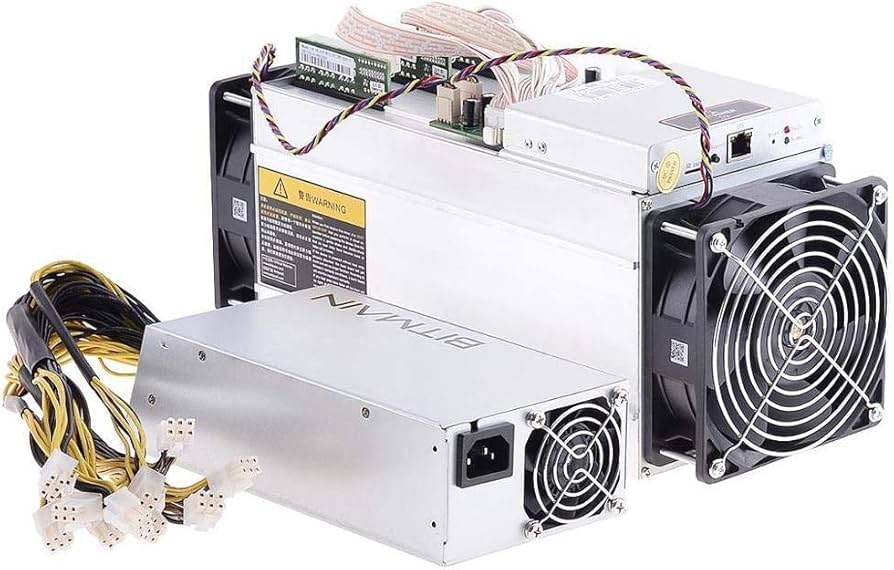
Figure: The Bitmain Antminer S9, an early-generation ASIC Bitcoin miner. Bitmain’s product line has since advanced to much higher hash rates (image: Wikimedia Commons).
Overview of Popular Bitmain Antminer Models
Bitmain offers ASIC miners for both SHA-256 (Bitcoin/BCH/BSV) and Scrypt (Litecoin/Dogecoin) algorithms. Key models include:
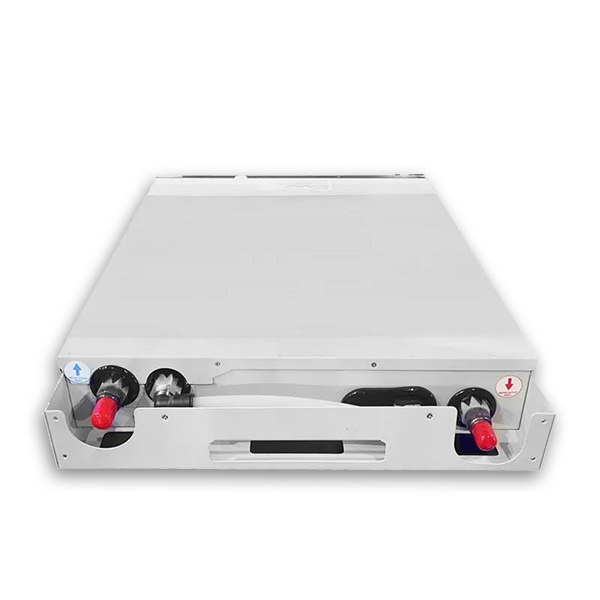
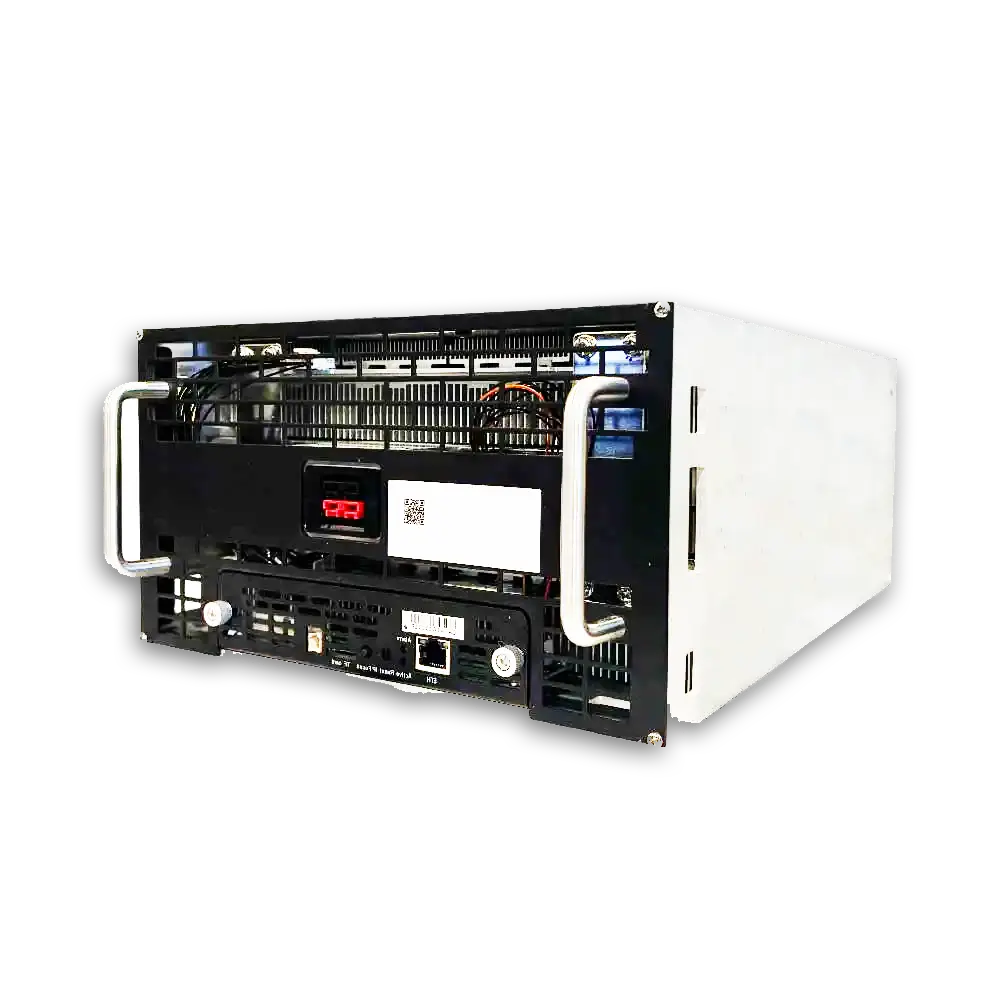
Antminer S21 Series (2024)—Bitmain’s latest flagship Bitcoin miners. The air-cooled S21 XP gives 270 TH/s using 3645 W (about 13.5 J/TH). The hydro-cooled S21 Hydro reaches 335 TH/s with 5360 W. These new units use a single heavy-duty P13→C20 power cable to handle ~3500–5360 W. (By comparison, the older Antminer S19 Pro achieves 110 TH/s at 3250 W.)
Antminer S19/S19 Pro (2020–2021)—The previous-gen Bitcoin miners still in use. The S19 Pro operates at 110 TH/s, 3250 W (≈29.5 J/TH). The S19j Pro+ and S19 XP models were very efficient, reaching 20 J/TH. However, they are now being replaced by the S21 series.
Antminer L7 (2021)—A top Scrypt miner for Litecoin and Dogecoin. The L7 reaches about 9.05 GH/s at 3425 W (≈0.37 J/MH). It mines both LTC and DOGE simultaneously via merged mining.
Antminer L9 (2022)—A more powerful Scrypt miner, offered in 15, 16, and 17 GH/s versions. The 17 GH/s L9 consumes ~3570 W (~0.21 J/MH), nearly doubling the L7’s throughput at similar power. The L9’s improved efficiency and fan control make it quieter and more profitable than its predecessors.
Antminer key specs: Below is a quick summary of these models’ capabilities:
S21 XP (Air) – 270 TH/s @ 3645 W (13.5 J/TH)
S21 Hydro – 335 TH/s @ 5360 W (≈16.0 J/TH)
S19 Pro (2020) – 110 TH/s @ 3250 W (≈29.5 J/TH)
L7 (2021) – 9.05 GH/s @ 3425 W (≈0.37 J/MH) [Litecoin/Dogecoin mining]
L9 (2022) – 17 GH/s @ ~3570 W (≈0.21 J/MH) [Litecoin/Dogecoin mining]
Each model is suited to different coins and budgets. In general, the S21 series is today’s top Bitcoin miner, while the L7/L9 excel at Litecoin/Doge.
When considering miners, focus on three key factors:
- Hash rate (TH/s or GH/s)
- Power use (W)
- Energy efficiency (Joules per hash)
Bitmain Antminer S21 Series: Next-Gen Bitcoin Mining
The Antminer S21 is Bitmain’s latest Bitcoin ASIC. Launched in late 2023, it comes in air- and hydro-cooled versions. The S21 XP (air) provides 270 TH/s at 3645 W, offering about 13.5 J/TH energy efficiency. The S21 Hydro model ramps up to 335 TH/s at 5360 W (≈16 J/TH) by using liquid cooling. Both versions use a new single-cable power connection (P13 to C20, 12 AWG) to handle high current. These miners have built-in Gigabit Ethernet ports and run Bitmain’s SHA-256 firmware for ease of setup.
Compared to its predecessor, the S19 Pro (110 TH/s @ 3250 W), the S21 XP nearly triples the hash rate. Bitmain’s timeline shows that the S19 series started the 30 J/TH era. The S21 series has lowered that to about 10 J/TH. In practice, at today’s electricity prices, a single S21 XP can mine Bitcoin profitably if power is cheap. (For reference, miners like these can be found for sale—e.g., the S21 XP was listed around US$4549 on retailer sites.)
Bitmain Antminer S19 Pro and Other SHA-256 Miners
Before the S21, Bitmain’s top Bitcoin miner was the S19 Pro (launched 2020). It achieves 110 TH/s at 3250 W. The S19 Pro is not as powerful as the S21. However, it is still popular because it costs less, often under $1000 when bought used. It is also known for its reliability. Bitmain also offered the S19j Pro, S19 XP, and S19k Pro in this generation. The S19 XP has a speed of 132 TH/s and uses 3010 W, which is about 20 J/TH. The S19k Pro has a speed of 100 TH/s and uses 2980 W.
Earlier models like the Antminer S9 (2016) were very important back then. It had a power of 14 TH/s and used 1375 W. However, it is now outdated. Bitmain’s historical data shows a steady drop in J/TH. The S9 had about 98 J/TH. The S19 dropped to around 30 J/TH. The S21 is even lower at about 13 J/TH.
When picking a SHA-256 Antminer, consider the hash rate and power usage. A higher TH/s gives you more Bitcoin daily, but it also increases your electricity costs. Profitability calculators (e.g., NiceHash) can estimate daily returns and ROI for models like the S19 Pro and S21 series. Retailers often sell warranties and power supplies together. For example, one listing shows an S21 XP miner with a PSU for about $4549.
Bitmain Antminer L7 and L9: Litecoin/Dogecoin Mining
For Scrypt-based coins, Bitmain’s Antminer L7 and L9 dominate. The Antminer L7 (launched 2021) delivers about 9.05 GH/s at 3425 W (≈0.37 J/MH). It mines Litecoin and Dogecoin via merged mining, earning both coins simultaneously. Its four fans keep it cool at 75 dB noise, but due to high power draw, it’s best in a dedicated mining rig room.
The newer Antminer L9 (2022) significantly ups the game. Available in 15, 16, or 17 GH/s models, it roughly doubles the hashrate of the L7. For instance, the 17 GH/s L9 uses about 3570 W, cutting efficiency to ~0.21 J/MH. In practical terms, an L9 yields ~30–36 US dollars per day (gross) at 17 GH/s, assuming low power costs. Bitmain improved the L9’s fan controller as well, making it quieter in cooler environments (~72–76 dB). (Note: even the L9 is very loud for home use—it’s best kept in ventilated basements or insulated cabinets.)
In summary, if you aim to mine Litecoin/Dogecoin, the L9 is more efficient than the L7. However, L7 units remain widely used and may be cheaper used. Retail listings show Bitmain L9 Dogecoin miners (15–17 GH/s) priced around US$4249 on promotion.
How to Set Up and Use a Bitmain Antminer
Getting started with a Bitmain Antminer involves the following general steps:
Unpack and inspect: Remove the miner from its packaging. The Quick Start Guide should be included. Verify you have the required power cable(s) (many new models use a P13→C20 cable).
Choose a location: Place the miner on a flat surface in a well-ventilated area. Ensure ambient temperature stays within the recommended range (usually 0–40°C) and that the exhaust isn’t blocked.
Connect power: Plug the miner into a compatible power supply. For example, the S21 uses a single 30A, 240V PDU/C20 input. Earlier models (S19, L7/L9) use two 12 AWG IEC C13→C14 cables. Do not use regular wall outlets (miners draw too much current).
Network connection: Attach the Ethernet cable. Antminers do not have WiFi, so connect to your router or switch. The miner should obtain an IP via DHCP. (Some setups use dedicated mining controllers with static IP.)
Find the miner’s IP: In your router’s DHCP client list, locate the new device. Often Bitmain miners default to hostnames like
Antmineror use the MAC address.Log into the web interface: Open a browser and enter the miner’s IP. The default login is usually
root/root(or see the Quick Start Guide). You can then update the firmware if desired.Configure mining pool: In the miner’s settings, enter your chosen mining pool address, port, worker name, and password. Popular SHA-256 pools include SlushPool, Poolin, F2Pool, etc. For Scrypt mining, pools like WoolyPooly or ViaBTC pay both LTC and DOGE.
Start mining: Save the configuration. The miner will begin hashing and submitting work to the pool. Monitor its statistics in the web UI to confirm hash rate and temperature.
Bitmain’s official user manuals and FAQs (on Bitmain.com) provide detailed instructions. The process is mostly plug-and-play. After the initial setup, the miner runs all the time. It only needs occasional firmware updates and maintenance. dusting fans) required.
Purchasing Considerations and Deals
When buying a Bitmain Antminer, consider your budget, electricity cost, and target coin. New machines (e.g., S21, L9) deliver top performance but cost thousands of dollars. Used or older models (S19 Pro, L7) can be found cheaper on secondary markets. Always buy from reputable sellers and verify the model’s specifications.
Retailers often offer promotions or bundled deals. For example, the Antminer S21 XP (270 Th/s) was once priced at about US$4549. The L9 Doge Miner (up to 17 GH/s) was around US$4249. These prices may fluctuate with market demand. It’s wise to compare multiple vendors and check for warranty coverage. Additionally, factor in shipping costs and import duties for international orders.
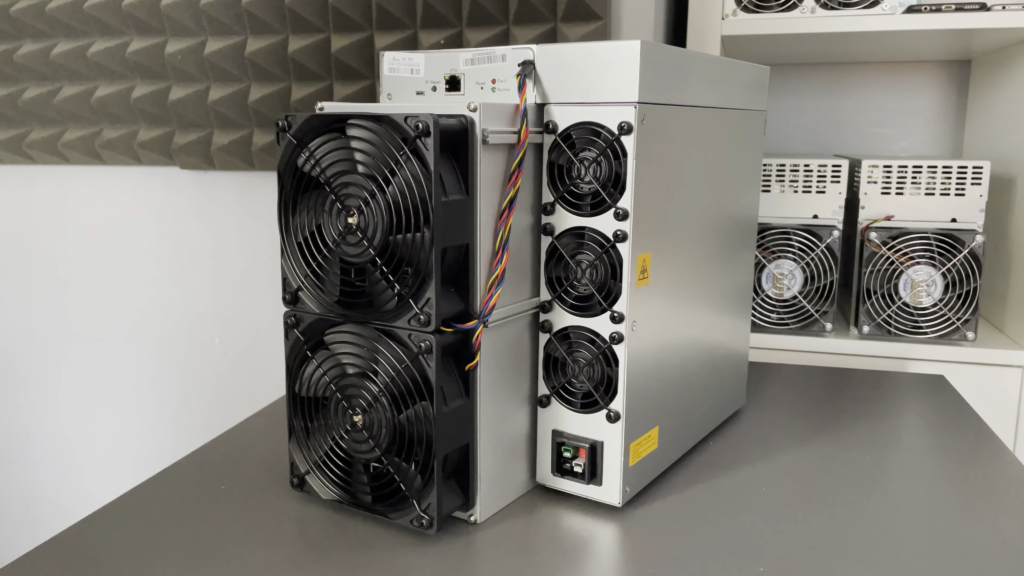
Figure: A Bitmain Antminer S21 miner with festive decorations (holiday promotion theme). Bitmain rigs are often featured in seasonal sales and bundle offers by vendors.
Regardless of model, energy efficiency is critical. A miner might have a high hash rate, but if it consumes too much power, profitability suffers. Always calculate ROI based on your local electricity rate and the miner’s J/TH (or J/MH) efficiency. Tools like NiceHash’s profitability calculator or CoinWarz can help estimate earnings.
Conclusion
The Bitmain Antminer family represents the cutting edge of ASIC crypto mining. The Antminer S9 is a classic model. The newer models are the S21 and L9. Each new generation uses less energy and has more hashing power. In 2025’s landscape, Bitmain’s S21 series leads Bitcoin mining, while the L7/L9 dominate Litecoin/Dogecoin mining. When picking an Antminer, match the model to your target coin and power budget. Always consider electricity costs.
Ready to mine? Explore current Antminer offerings and retailer deals, or visit Bitmain’s official site for more info. Whether you are getting a new S21 or setting up an L7 for altcoin mining, a good setup is important. Choosing the right pool will help you get the most from your investment. Start by turning on your Antminer in a cool, well-ventilated area. Connect it to a reliable mining pool and let it work!